Tankless water heater installation
New installs, swaps, and re-pipes with proper isolation valves, service access, and manufacturer-required clearances.
Serving Colorado Springs, Colorado & surrounding areas
Mon–Fri 8am–6pm · Sat 9am–2pm
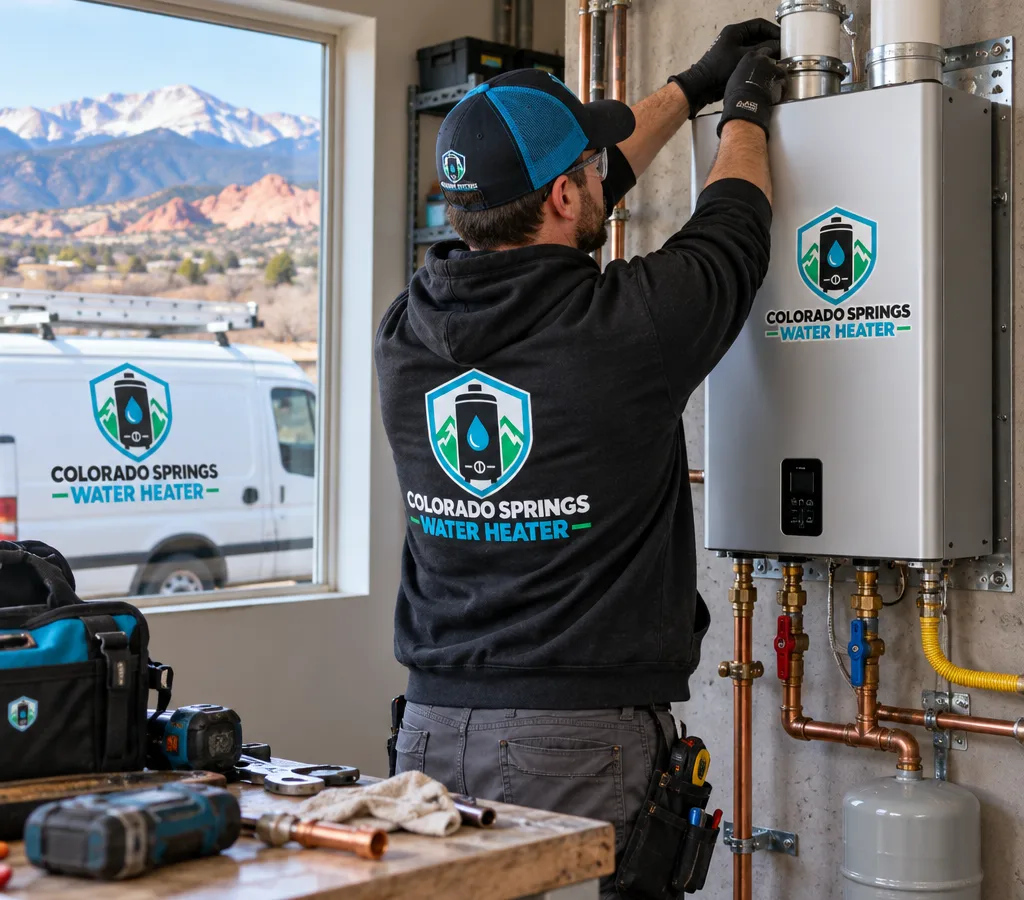
Tankless water heater service in Colorado Springs
Get hot water you can count on with a properly sized, code-correct tankless system. We handle installation, maintenance, flushing, replacement, and tank-to-tankless conversions across Colorado Springs.
Proper planning from the start
A tankless water heater is not a drop-in swap for most homes. A qualified tankless water heater installer starts by confirming demand—how many fixtures you use at once—fuel type, venting route, and where the unit can be mounted safely.
In Colorado Springs, that planning matters because many homes have tight mechanical rooms, finished basements, or garage installs where venting and combustion air need to be handled correctly. The goal is simple: steady hot water, safe operation, and a setup that can be serviced without tearing into walls later.
Colorado Springs Water Heater installs and services tankless units for homes and light commercial spaces. If you are comparing options after a breakdown, you can also weigh repair versus replacement as part of an overall water heater repair plan before committing to a new system.
Complete tankless service
New installs, swaps, and re-pipes with proper isolation valves, service access, and manufacturer-required clearances.
Annual checkups that focus on safe combustion, clean air intake and exhaust pathways, and early leak detection at fittings and valves.
Descaling flush through the service ports to reduce scale buildup that can cause noise, reduced flow, and overheating shutoffs.
Remove and replace aging or failed units, confirm venting and gas sizing, and bring older installs up to current best practices where possible.
Convert a standard tank system to tankless with the right venting, gas or electrical requirements, and plumbing changes for reliable performance.
A written scope that spells out what is included, what changes—if anything—are needed, and how the system will be set up for future service.
Conversion requirements
A tank to tankless conversion often involves more than swapping a box.
Plumbing: We typically add isolation valves and service ports so the unit can be flushed properly. We also confirm the hot and cold piping layout supports the manufacturer's minimum flow requirements.
Venting: Tankless units commonly use dedicated vent materials and specific termination rules. We plan the vent route so it is safe, serviceable, and matches the unit's category and length limits.
Gas or electric supply: Many gas tankless installs require verifying gas pipe sizing and pressure. Electric tankless may need electrical upgrades depending on the model.
Condensate, when applicable: Some high-efficiency units produce condensate that must be drained appropriately.
If your home is in older parts of Colorado Springs such as Old Colorado City, it is common to find mixed generations of piping and tight routing spaces. In newer areas like Briargate, mechanical rooms may be cleaner but vent routing can still be the deciding factor. Either way, we confirm the details on-site before finalizing the plan.
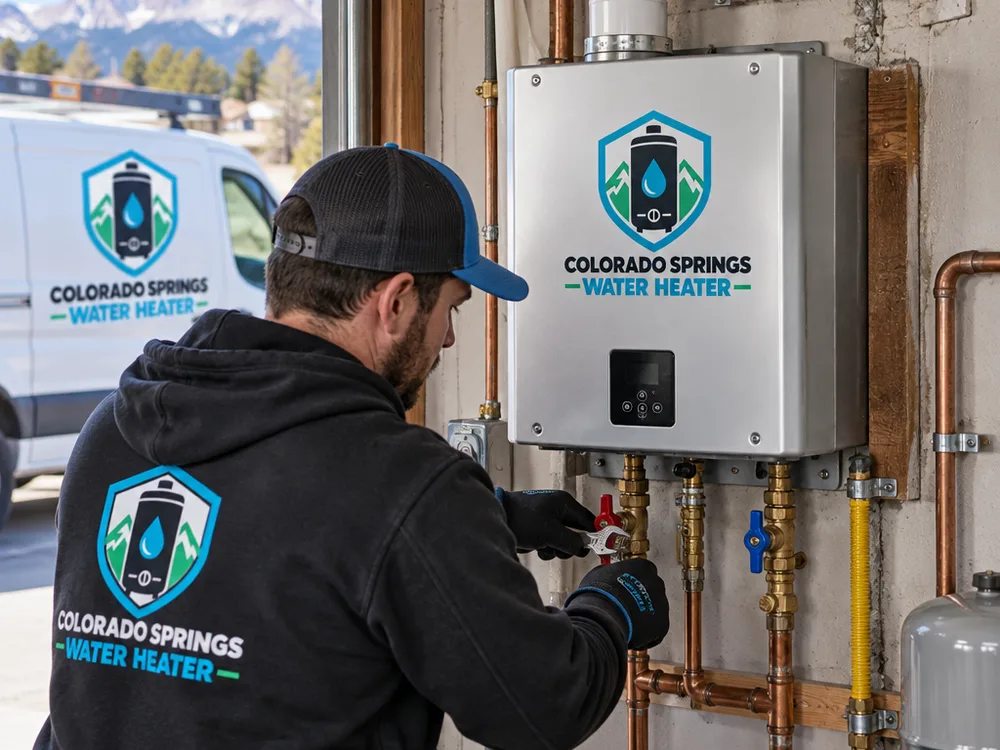
Colorado Springs installation pricing
Tankless water heater installation cost in Colorado Springs typically ranges from about $3,000 to $7,500+, depending on the unit type and how much the home needs to be modified. A straightforward replacement of an existing tankless unit often lands around $2,000 to $4,500, while a tank to tankless conversion is commonly $4,000 to $9,000+.
Final price depends on venting route and materials, gas line sizing or electrical requirements, condensate drain needs, access to the install location, and whether old piping must be updated. Exact cost is confirmed after an on-site assessment of the existing system and layout.
We look at fixture demand, fuel type, mounting location, and venting path. If you are replacing an older unit, we also review what failed and why.
You get clear choices for the unit class and the required parts of the install—valves, venting, and gas or electrical changes—so you can decide with real information.
We mount the unit, run the correct venting, set up the plumbing with service valves, and verify gas or electrical connections per manufacturer requirements.
We check for leaks, confirm stable operation, and walk you through how to shut off water or gas if needed and what maintenance schedule to follow.
Protect performance and reliability
Tankless water heater maintenance is mainly about keeping heat transfer efficient and keeping the unit operating safely. The two items that typically matter most are flushing and descaling—based on local water conditions and use—and checking the air and venting pathways so the burner and sensors are not fighting restricted airflow.
Tankless water heater flushing is done through the service ports using the isolation valves. The goal is to circulate a descaling solution long enough to break down mineral buildup, then rinse and return the unit to normal service. Scale can cause hotter-than-normal operating conditions, noise, inconsistent temperatures, and error codes that shut the unit down.
If you are in areas like Rockrimmon or Broadmoor where the install may be tucked into a tight utility space, service access becomes part of maintenance. A good install leaves room to connect flush hoses and reach the filter and valves without disassembly.
Practical tankless answers
Most installations take one day, while a tank to tankless conversion can take longer when venting, gas line sizing, or electrical work must be changed. The timeline depends on access to the install area, how far the vent must run to an exterior wall or roof, and whether the existing plumbing layout needs rework.
Yes, annual tankless water heater maintenance is a good baseline for most homes because it catches scale buildup, airflow issues, and small leaks before they become shutdowns. We also check the service valves, inlet screen or filter, and verify the venting and combustion air pathways remain clear.
Many homeowners plan on flushing about once per year, but the right schedule depends on water quality and usage. If you notice reduced hot water flow, temperature swings, or recurring error codes, a flush and inspection is a sensible first step before replacing parts.
Tankless water heater replacement is often the better move when the heat exchanger is compromised, repairs are stacking up, or parts availability is limited for an older model. If the unit is frequently shutting down or leaking internally, replacement can be more predictable than chasing repeated failures.
A tank to tankless conversion does not inherently increase pressure because pressure is set by your plumbing system and any regulator, not the heater. What it can change is how hot water is delivered under high demand, which is why correct sizing and proper plumbing layout matter.
A solid quote should specify the unit model or class, venting material and routing plan, gas line or electrical scope if changes are needed, isolation valves and service ports for future flushing, permit expectations when applicable, and disposal of the old unit. If any of those items are vague, ask what is assumed versus included.
Plan your tankless service
Tell us what you have now (tank or tankless), what problems you are seeing, and where the unit is located. We will confirm compatibility, walk you through options, and provide a clear plan for installation, maintenance, flushing, or replacement.