No hot water (electric)
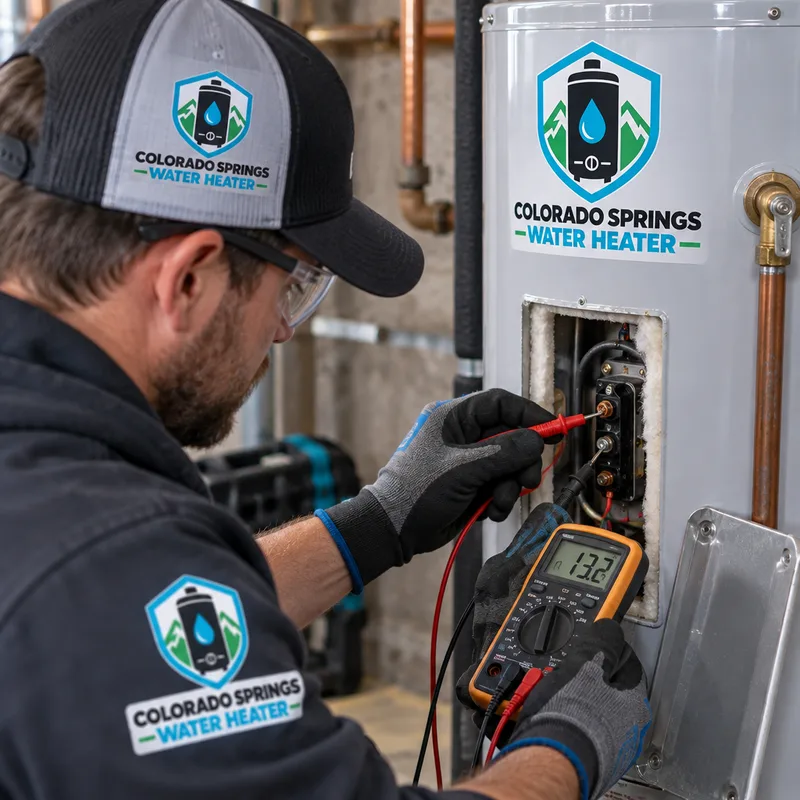
Testing and replacement of failed heating elements or thermostats, plus checks for wiring damage and breaker issues that cause repeat shutdowns.
Serving Colorado Springs, Colorado & surrounding areas
Mon–Fri 8am–6pm · Sat 9am–2pm
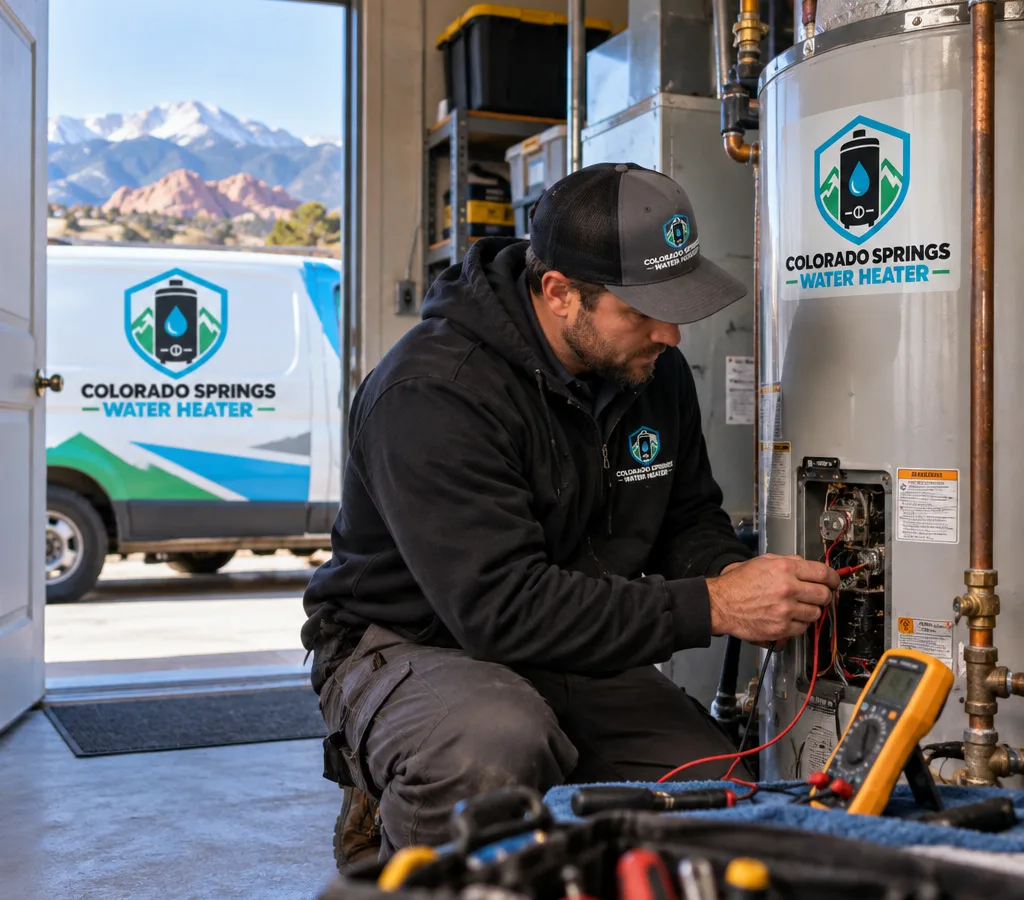
Water heater repair in Fort Carson
When the hot water stops, you need a clear diagnosis and a safe repair fast. We troubleshoot gas and electric units, explain the fix in plain terms, and get your hot water back with minimal disruption.
Fort Carson repair service
If you searched for hot water heater repair Fort Carson, you are probably dealing with one of three problems: the water is cold, the unit is leaking, or the temperature keeps swinging. Colorado Springs Water Heater focuses on finding the actual failure point first—power, gas, venting, controls, or tank condition—then recommending the most practical fix.
Fort Carson homes and nearby rentals can have tight utility closets, shared mechanical spaces, and busy household schedules. That means repairs need to be efficient, clean, and safe. We arrive ready to test the system, isolate the issue, and walk you through what is happening before work begins.
Common symptoms we respond to:
If you are outside the immediate Fort Carson area, our broader water heater repair in Colorado Springs coverage may still be a good fit depending on scheduling and access.
Systematic troubleshooting
A good repair starts with verifying the basics, then narrowing to the failed component or condition. For electric units, we check power at the disconnect or breaker, thermostats, heating elements, and wiring condition. For gas units, we check the pilot or ignition system, gas valve operation, combustion air, and venting for safe draft.
We also look at the tank itself and the plumbing connections. A heater can act like it has a control problem when the real issue is sediment buildup, a failing dip tube, a sticking temperature-and-pressure relief valve, or a leak at the nipples and flex lines.
Practical rules we use during troubleshooting:
You will get a simple explanation of the cause, the repair options, and what to expect after the fix, including recovery time, noise changes, and whether flushing or follow-up maintenance is recommended.
Repair scope
Testing and replacement of failed heating elements or thermostats, plus checks for wiring damage and breaker issues that cause repeat shutdowns.
Troubleshooting the thermocouple or flame-sensing circuit, gas valve behavior, and ignition components so the burner lights reliably and stays stable.
Addressing control calibration, mixing conditions, sediment interference, and dip tube problems that make showers go hot-cold-hot.
Repairing leaks at the shutoff, flex connectors, drain valve, and T&P valve discharge components when the tank itself is still sound.
Evaluating sediment and scale, checking burner performance or element condition, and advising whether a flush is worthwhile for the unit's condition.
Verifying safe venting on gas units, confirming temperature settings, and checking that the T&P valve and discharge routing support safe operation.
Repair pricing
Hot water heater repair in the Fort Carson area typically ranges from about $200 to $650 for common electrical or gas control repairs, while larger issues—multiple parts, access constraints, or leak-related plumbing work—can run $650 to $1,200+. Your final price depends on the heater type, which components failed, unit age and condition, and how difficult the connections are to access.
After diagnosing the issue on-site, we confirm the exact scope and cost before moving forward so you can decide whether repair or replacement makes the most sense.
From symptoms to a verified repair
You tell us the symptoms—no hot water, leak, tripping breaker, or pilot issues—and what type of unit you have if known. We prioritize active leaks and total loss of hot water.
We safely test the power or gas supply, controls, heating elements or burner operation, gas venting, and visible tank and connection condition.
We explain what failed and why, then lay out repair options. If replacement is the safer call, we tell you clearly and explain the decision points.
Once approved, we complete the repair, restore operation, and confirm stable temperature and normal cycling. For gas units, we verify safe draft and burner operation.
You get practical recommendations about temperature settings, warning signs, and whether maintenance such as flushing makes sense for the unit's current condition.
Repair or replacement
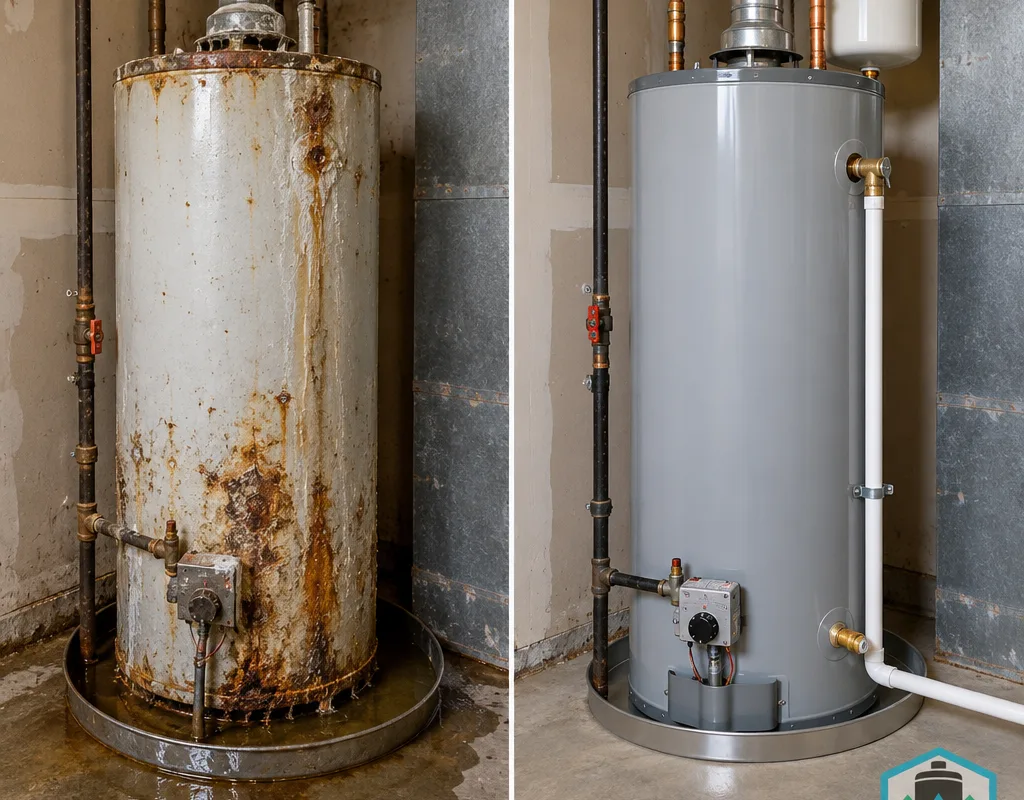
Not every problem should be repaired. Sometimes the safest and most cost-effective path is replacement, especially when the tank is leaking or corrosion is advanced.
Replacement is usually recommended when:
If replacement is on the table, we help you choose the correct type and capacity, confirm venting and clearance needs for gas units, and plan a clean swap with proper shutoff, drain-down, reconnection, and startup checks.
If you are comparing repair and replacement, a broader overview of common failure modes, warranties, and replacement triggers can also help you make the decision.
“We lost hot water overnight and had family visiting. The tech diagnosed a failed element quickly, explained the options, and had the heater running again the same visit.”
M. R.
“Our unit was leaking at a valve and we were worried the tank was done. They found the actual source, fixed it, and checked everything before leaving. No upsell, just the right repair.”
J. L.
Practical repair answers
In many cases, you will have hot water the same day as the repair, but the exact timing depends on the heater type and what failed. Electric units typically start heating as soon as the repaired circuit is restored and the tank refills, while gas units begin recovery once the burner is operating safely. We confirm operation before we leave and give a realistic recovery-time estimate based on tank size and starting water temperature.
A sudden loss of hot water is commonly caused by a failed heating element or thermostat on an electric unit, or an ignition, pilot, or gas valve issue on a gas unit. Breaker trips, loose wiring, and a safety shutdown can also stop heating. Diagnosis matters because the symptom looks the same at the faucet, but the fix and safety checks differ.
A leak should be treated as urgent because it can damage flooring and nearby finishes quickly, and some leaks worsen without warning. The key is identifying whether water is coming from a fitting or valve, or from the tank body. A leaking tank usually requires replacement; a leaking connection or valve may be repairable after the unit is shut off and depressurized.
Yes. We troubleshoot and repair both gas and electric storage water heaters, including controls, heating components, and common leak points. For gas units, we also verify venting and safe burner operation because a heater that runs is not necessarily one that runs safely.
If the tank is leaking, replacement is usually the right choice. If the tank is sound and a component such as an element, thermostat, or ignition part failed, repair often makes sense. Age and condition matter too: corrosion, repeated breakdowns, and heavy sediment can make repairs short-lived. After diagnosis, we explain the likely reliability of each option.
If there is active leaking, shut off the cold-water supply to the heater and avoid using hot water until the source is identified. If you smell gas or notice unusual burner behavior, leave the area and follow standard gas-safety steps. If an electric heater's breaker repeatedly trips, stop resetting it and wait for diagnosis to avoid damaging wiring or components.
Schedule Fort Carson service
Tell us what your water heater is doing and when the problem started. We will schedule a Fort Carson service visit, pinpoint the cause, and lay out the repair or replacement options with a clear scope before any work begins.